UV PRINTING / PRACTICAL ADVANTAGES
UV Printing
Benefits.
Detailed graphics, fast curing and more freedom in material choice.
For signs, displays and branded surfaces, UV printing offers useful production options. The strongest result comes from matching the ink, substrate and finishing to the application.

THE PROCESS IN BRIEF
Why does UV printing work differently?
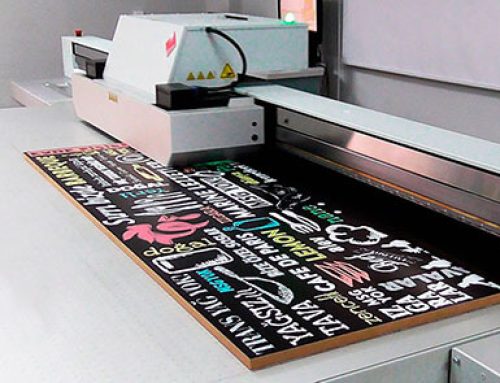
In UV printing, a digital printer deposits UV-curable ink onto a suitable material. Ultraviolet light then initiates curing as the print is produced, creating a solid ink layer without a long evaporation-based drying stage.
That process can help retain fine detail and move a job quickly into cutting or assembly. It can also support direct printing on many rigid surfaces. Quality and performance still depend on the printer, ink, artwork, substrate and preparation.
FIVE REASONS TO CONSIDER UV
Benefits that matter in production.
Every project has a different priority: appearance, lead time, material, service conditions or cost across the whole job.
01 / Image quality
Rapid curing helps control ink spread, supporting sharp lettering, intricate artwork and vivid colour. Profiles and samples help judge colour on the chosen material.
02 / Production speed
Cured prints can often proceed promptly to finishing. This saves drying time, though prepress, cutting, packing and installation still shape the delivery schedule.
03 / Material range
Suitable plastics, metal, glass, wood and display boards open up direct-print options beyond conventional paper. Some surfaces require primer or testing.
PERFORMANCE & VALUE
The other two benefits need a closer look.
04 / Durability matched to use
A suitable UV ink and substrate can provide good resistance to everyday handling. For exterior signs, weather, sunlight, abrasion, mounting and any protective finish all affect the outcome. A UV print is not automatically scratchproof or fadeproof.
05 / Cost across the complete job
Direct printing may remove a separate mounting step, and quick curing can streamline finishing. Whether it costs less depends on the quantity, substrate, ink coverage, preparation and lifespan required. Compare finished specifications rather than print price alone.
APPLICATIONS
Where the benefits become visible.
Signage and outdoor graphics
Rigid panels, shop graphics and exhibition signage benefit from detailed direct print. Outdoor specifications require the right media and protection for the site.
Retail and point of sale
Campaign panels, display components and branded fixtures can be produced on compatible materials, with consistent artwork across locations.
Packaging and prototypes
Short runs and packaging mock-ups can show colour and branding before a broader production decision. Folding and food-contact requirements need a separate material check.
Promotional and product graphics
Selected flat or suitably positioned items can carry bespoke artwork. Shape, coating and handling requirements determine the process.
Industrial and automotive uses
Labels, panels and decals may need tests for adhesion, cleaning, temperature or forming before they are approved for a specific use.
Large-format campaigns
UV printers can support large panels and, with appropriate roll equipment, certain banners or wraps. Material width, seaming and installation must be planned.
IN PRACTICE
How Boran Reklam uses UV printing.
Material-led production
Boran Reklam produces graphics for suitable wood, metal, plastic and other display materials. Surface preparation, colour, opacity and finish are considered in relation to the artwork and the location where it will be used.
Retail and signage delivery
UV print can form part of an indoor display, an outdoor sign or a wider retail rollout. Production can be coordinated with cutting, fabrication and installation so the final piece suits the brief rather than the printer alone.
A RESPONSIBLE SPECIFICATION
What about environmental impact?
Some UV ink systems are formulated without solvents or volatile organic compounds, and rapid curing can remove a prolonged drying stage. These properties belong to particular ink sets and production setups; they should not be assumed for every UV print.
Substrate sourcing, ink use, electricity, offcuts, logistics and product life all contribute to environmental impact. If this is a priority, discuss material and finishing choices before approval rather than relying on a broad “eco-friendly” label.
FREQUENTLY ASKED QUESTIONS
Choosing UV for your project.
How is UV printing different?
UV light cures the ink as it is printed. Other print processes may rely on evaporation, heat or a different curing mechanism.
Which materials can be printed?
Compatible plastics, metals, glass, wood, boards and selected roll media are possible. Coatings and surface preparation can change the result.
Does UV print suit outdoor signs?
It can, when the entire sign is specified for sunlight, moisture, abrasion and the expected service period. An outdoor sample or protective finish may be appropriate.
Is UV printing always less expensive?
No. Price varies by material, quantity, layers and finishing. The right comparison considers the finished item and the work it replaces.
Can it handle large campaigns?
Yes, with production planning for dimensions, consistent files, substrate supply, finishing and site logistics. A building wrap also requires suitable roll media and installation engineering.
Are UV prints always more durable or greener?
No universal ranking applies. Durability and environmental impact depend on ink, material, use conditions and the alternative process being compared.