FROM FILE TO FINISHED BOARD
What digital UV printing changes.
Digital production gives designers a broad choice of printable substrates and makes it practical to prepare short runs, personalised artwork and several versions of the same campaign. Files can be proofed and adjusted without preparing a separate screen for each design.
Screen printing remains useful for many applications. For a project with frequent artwork changes or modest quantities, digital UV printing can simplify setup. The best process still depends on quantity, material, colour requirements and the finished use.
DIRECT-TO-BOARD
Print onto the PVC surface.
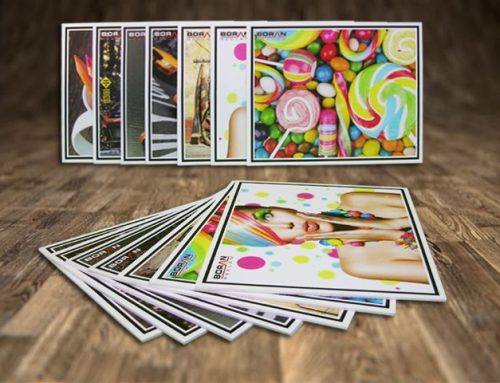
Another common method is to print the artwork onto adhesive film and mount that film onto a PVC foam board. With a compatible flatbed UV setup, the image is printed directly onto the board, removing the separate film-mounting step.
Digital UV printing supports variable graphics and fast artwork changes. The print specification should still be checked on the chosen board grade and finish before a full run.
THE MATERIAL
Why choose PVC foam board?
PVC foam board, often called Forex, is a lightweight rigid sheet used for signs, displays, exhibition graphics, photographic panels and shopfitting. A smooth white printing grade provides an even surface for colour and detailed imagery. Sheets can also be cut to shape or drilled as the design requires.
01 / SURFACE
Made for printed graphics
A suitable printing grade provides a smooth, even face and good ink adhesion for direct digital printing.
02 / HANDLING
Lightweight and workable
PVC foam is relatively light for a rigid board. Cutting, contour shaping and mounting can be planned with the print.
03 / APPLICATION
Versatile display use
Printed panels can be used in retail POS, exhibitions, wayfinding and branded interiors.
04 / SPECIFICATION
Select the right grade
Water exposure, sunlight, fire classification, thickness and fixing requirements vary by sheet and project; confirm them for the intended setting.
THE PRINTING PROCESS
How is PVC foam printed with UV ink?
A flatbed printer deposits ink on the PVC foam surface. UV lamps cure the ink during the printing process, so the image can be handled for the next production stage after the required checks. Curing does not remove the need to verify adhesion, appearance and suitability for the finished application.
01
Prepare the board
Confirm the sheet grade, thickness and flatness. Keep the printable surface clean and free of dust or protective film.
02
Prepare the artwork
Set the final size, resolution, bleed and colour references. Include any cut paths, drill holes or panel divisions in the production files.
03
Print and cure
The flatbed applies the approved image to the board, while UV light cures each printed pass. Ink and board compatibility should be tested for the job.
04
Finish and inspect
Contour cut, trim, drill or mount the panel as required. Check colour, edges, alignment and surface condition before packing.
WHERE IT WORKS
From display panels to branded spaces.
Retail and POS: product information panels, promotional displays and changeable campaign graphics.
Exhibitions: lightweight printed components and presentation boards for a planned stand layout.
Interiors: photographic prints, wayfinding and decorative brand panels.
Exterior use: selected boards can serve outdoor signage projects when the sheet grade, print, fixing, exposure and expected service period are specified together.
A USEFUL DETAIL
The finished shape matters as much as the print.
Provide dimensions, mounting points and the final cut outline at the briefing stage. A large wall panel, small shelf sign and freestanding display each need different thickness, support and finishing decisions.
For colour-critical work, request a sample on the selected PVC foam board rather than judging the result from a screen alone.
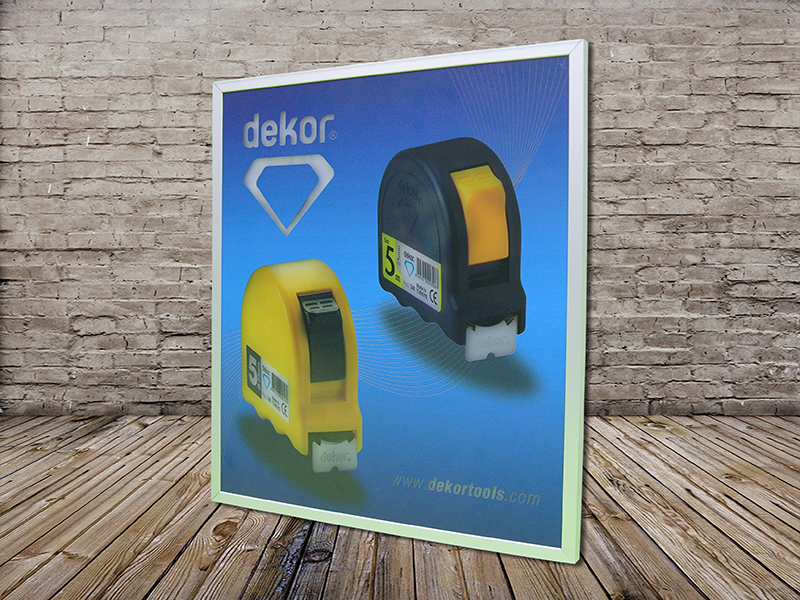
Existing image from the original post: an acrylic signage example, shown here to illustrate another rigid substrate.
BEYOND PVC FOAM
A digital process for different surfaces.
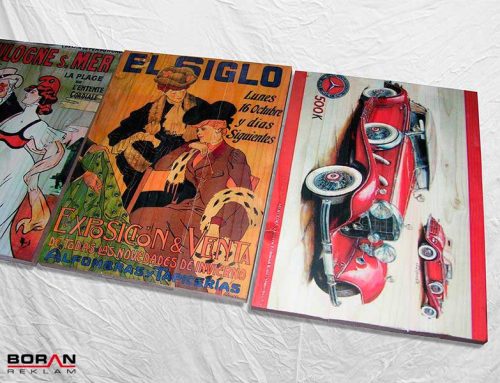
UV printing is used on several compatible rigid materials, including acrylic, composite panels and wood. Each substrate has its own surface, opacity and adhesion considerations, so a print setup that works on white PVC foam should not simply be copied to another material.
On clear or coloured substrates, a white ink layer may be planned to support the visible colours. The intended viewing side and lighting conditions are part of that decision.
BEFORE REQUESTING A QUOTE
What to include in the production brief.
Share the application, finished dimensions, quantity and artwork variations. Add the mounting method, indoor or outdoor location, expected duration and any cutting or drilling requirements. If colour matching matters, send brand references and ask about a material sample.
This information helps Boran Reklam propose the board grade, thickness, print setup and finishing for the actual project.